







Your Go-To Salesforce Partner for Automotive and Transportation

Salesforce Automotive Cloud for OEMs, Dealer Networks, and Fleet Operators

She bought the car two years ago. Since then she's had a recall, three oil changes, and a new phone number. The brand knows none of it. Stack Intelligence sets up Salesforce Automotive Cloud so carmakers, dealers, and fleets share one view.

Years in Business
7+
Certified Consultants
50+
Projects Delivered
550+

Trusted by Enterprise Teams as a Salesforce Consulting Partner

Logos of Texas Instruments, American Express, Fiserv, Autodesk, Target, Honeywell, Dell and Delta Air Lines have worked with Stack Intelligence on Salesforce.

Automotive and Transportation Problems We Fix With Salesforce

Talk to an automotive Salesforce expert

Every vehicle on the road shows up in at least three companies' systems. Almost none of them share it. Here's where that gap shows up most.

Vehicle and driver data, dealer performance, leads, warranty claims, fleet customers and subscriptions connected through Salesforce
  1. Vehicle and Driver Data Is Scattered

    The OEM knows the VIN. The dealer has the buyer's phone number. Oil changes and repairs are logged in the DMS. Telematics goes to a separate platform. Ask who owns this car today, and you'll get three different answers.

  2. Dealer Performance Is Hard to See

    Regional managers wait for monthly spreadsheets to see how each dealer is doing. By the time they spot that one store's test drives dropped in March, it's already the middle of May. Fixing the problem starts two months too late.

  3. Leads Get Lost Between Brand and Dealer

    A shopper configures a blue SUV on your site and clicks the quote button. The lead goes to a dealer by email, and nobody checks if anyone called back. Seven days on, she's test-driving something else across town.

  4. Warranty Claims Pile Up

    A service manager sends in a warranty claim with photos and part numbers attached. Someone at the OEM checks it by hand against the policy. Approvals take weeks, so dealers get paid late and cars sit waiting in the service bay.

  5. Fleet Customers Get Generic Service

    A logistics company runs 400 of your trucks. Their fleet manager calls about a recall and gets the same script as a single-car owner. Nobody on the line can see the account's size, contracts, or open service tickets.

  6. Subscriptions and Billing Don't Line Up

    Connected services renew in March, telematics in June, and the extended warranty in October. Sales books them in one tool. Finance bills them in another. Customers get charged for plans they already canceled, and revenue quietly slips through every month.

How Stack Sets Up Salesforce for the Automotive Industry

Each problem above has a fix below. For carmakers and dealers, the work usually starts in Salesforce Automotive Cloud. A fleet or transportation company tends to begin with Service Cloud and Revenue Management instead. After that, we plug Salesforce into the tools you're using today.

  • Vehicle and Driver 360 in Automotive Cloud

    Search a VIN in Salesforce Automotive Cloud. Up comes the current owner, the selling dealer, and the car's repair history. We feed that data in from your DMS and telematics systems with MuleSoft or APIs. One search answers the ownership question.

  • Dealer Performance Dashboards

    Automotive Cloud tracks every dealer's leads, test drives, sales, and service work in real time. Your regional manager opens the dashboard Monday morning, and the stores falling behind sit right at the top. A store that slips in March gets a phone call in March.

  • Lead Routing to Dealers

    Website leads go straight to the right dealer inside Salesforce, along with the car the buyer configured. Each dealer works the lead in a portal we build on Experience Cloud. Your team can see who followed up and how fast.

  • Warranty Lifecycle Management

    Dealers upload claim photos and part numbers through their portal. Automotive Cloud's warranty tools then check each one against the policy on their own. Most claims clear in a few days. Only the odd ones land on someone's desk for a closer look.

  • Fleet and Commercial Accounts

    One fleet account page holds all 400 trucks along with their contracts and any open tickets. Service reps see the full picture before they answer. Field Service can send mobile technicians to the fleet's yard when trucks can't come in.

  • Subscriptions and Recurring Billing

    With Revenue Management, a customer's connected services, telematics plan, and extended warranty live on one record. Quotes, renewals, and invoices are generated from it. Cancel in June, and the June bill never goes out. Finance stops chasing refunds.

Let’s Map Your First Automotive Cloud Win

Maybe it's dealer leads that never get a call back. Or warranty claims stuck in a queue. Spend 25 minutes with us, and we'll map out how Automotive Cloud would fix it using the systems you already own.

Salesforce Case Studies From the Field

Pick a cloud and see what we built, for whom, and what changed after go-live.

View All

Stack Intelligence Client Testimonials

Clients rate Stack Intelligence 5/5 on Salesforce AppExchange, and these four quotes came in after their projects wrapped.

Our Salesforce Automotive Cloud Implementation Process

Get a tailored build plan

Our automotive projects run in seven steps. Step one tracks a single vehicle from the day it was ordered to its third trip to the service bay. Nothing moves forward without your team's sign-off.

  1. Follow One Vehicle

    You choose a car or truck sold last year. We retrace its life from the first lead to its last oil change, interviewing each person who handled it.

  2. Review Your Current Systems

    Next, we dig into the DMS, the dealer portal, telematics feeds, and how billing works. Already on Salesforce? Then your org and its sharing rules get a review as well.

  3. Design the Data Model

    Here we work out where vehicles, drivers, dealers, and fleet accounts live in Salesforce. It's also when we settle which dealer gets to see which customers.

  4. Build in Short Sprints

    Building starts in a sandbox, well away from live data. Standard Automotive Cloud features come before custom code. Your team clicks through a working demo after each sprint.

  5. Connect DMS and Telematics

    Dealer systems and vehicle data feeds go live in a test environment. While that runs, we clean up customer and vehicle records and do a trial load.

  6. Test Real Scenarios

    We push a real lead to a dealer and file a warranty claim. Then we bill a fleet renewal. Then your dealers and staff try it themselves before launch.

  7. Launch and Support

    A handful of pilot dealers go live first. The rest of the network follows once they're happy, and we stay on through hypercare and beyond.

Why Automotive and Transportation Companies Pick Stack

We start with questions about how your network runs. Who owns the customer after the sale? How fast does a dealer get paid on a claim? Where does telematics data end up? Your answers shape the build.

Hire Salesforce Consultants
  1. 01. Fleet and Mobility Experience

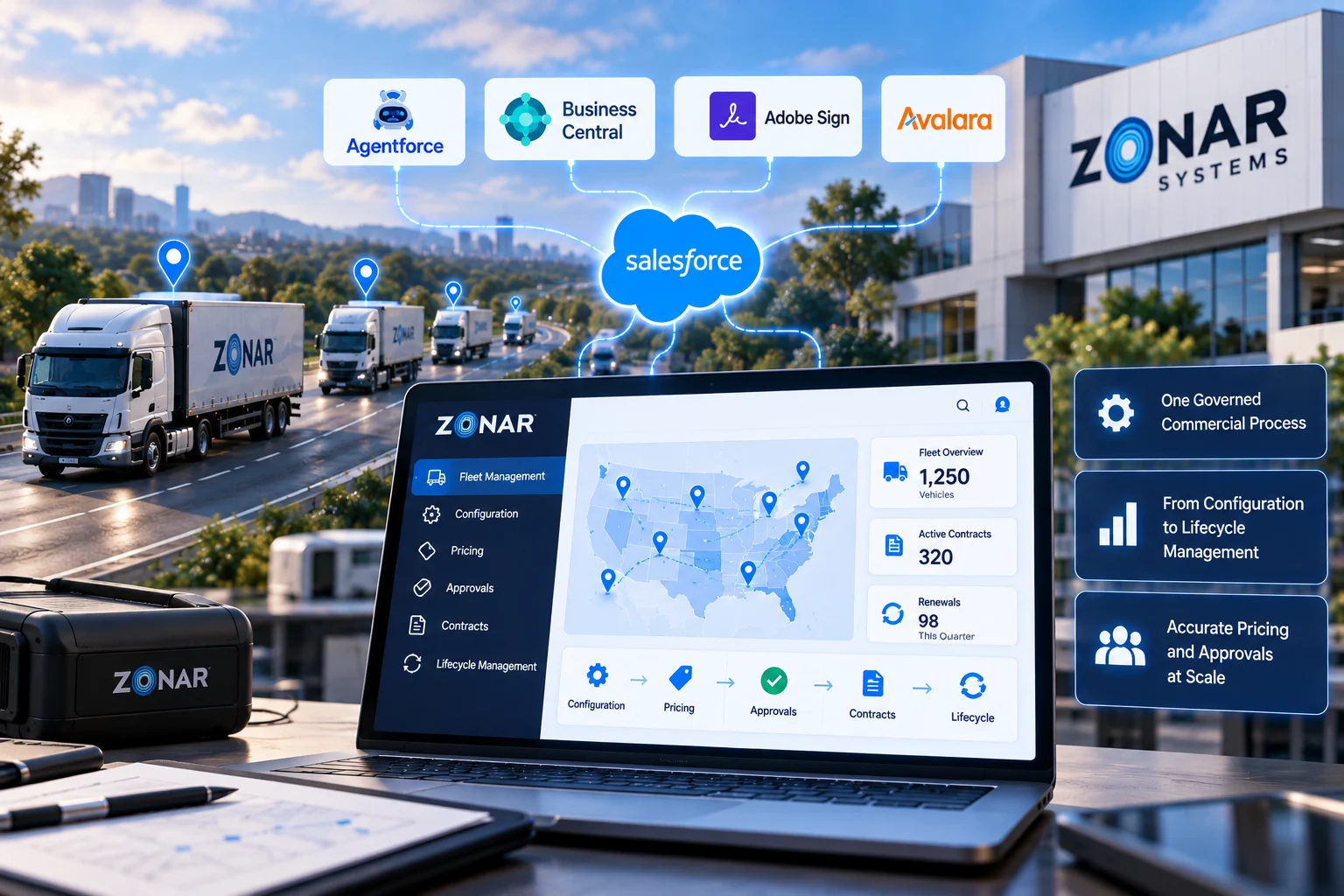
    We set up Revenue Management for Zonar Systems, a fleet technology company, with VIN lookup and ERP links built in. For Brave Mobility, we went from kickoff to launch in eight weeks.

    02. Business-First Salesforce Architecture

    The data model follows your vehicles, dealers, and fleet accounts. Nothing gets built until the people who'll use it have looked at the design and agreed.

  2. 03. Dealer Access Done Right

    Dealers should see their own customers and nobody else's. Sharing rules get planned with your team before anything is built. Nobody finds out on launch day that they can see a rival dealer's leads.

    04. Connected Systems and AI-Ready Data

    When the DMS shows one mileage and telematics shows another, every report suffers. We link those systems early and clean up the records. That gives Agentforce solid data to use later.


  3. 05. 50+ Consultants, 150+ Certifications

    Everyone on your project, from the architect to the analyst, works for Stack. The people with the certifications are the same ones who build your org and support it later.

    06. Support Beyond Go-Live

    Each model year brings new vehicles and updated warranty terms, and dealers come and go. Our Salesforce managed services update your org as those changes land.

Talk to Our Automotive Team

Nobody on our side will ask what a DMS is. We also know why dealers protect their customer lists. Our consultants know how this industry works, so the first call can be about your network.

Frequently Asked Questions About Salesforce Automotive Cloud

Salesforce Automotive Cloud is Salesforce's CRM for carmakers, dealer groups, and captive finance companies. Search any vehicle and the owner, selling dealer, and service history show up together. It also has tools for warranty claims, inventory, and dealer performance.

Salesforce for the automotive industry means the Salesforce products carmakers, dealers, and fleet companies rely on to sell vehicles and service them for years after. Automotive Cloud sits at the center. Service Cloud, Experience Cloud, and Revenue Management get added as needed.

Yes. Salesforce has AI that scores leads, forecasts parts demand, and analyzes inventory. There are also Agentforce agents that can answer an owner's questions or book a service slot. Our clients usually begin with whichever one their current data can support.

Plenty of OEMs and dealer groups run on it. As a Salesforce automotive CRM, it records a buyer's lead, purchase, and every service visit in one spot. The brand gets the national view. A dealer only sees its own customers.

With Salesforce for automotive, a dealer gets leads from the brand's website along with the car the buyer configured. Sales reps work those leads through a dealer portal. On the service side, advisors book appointments and send in warranty claims without leaving Salesforce.

Yes. Automotive Cloud in Salesforce can pull data from your dealer management system through MuleSoft or APIs. The approach depends on which DMS you run. After that, every sale and repair appears on the vehicle's record.

Yes. A fleet operator might manage its big accounts in Service Cloud and dispatch mobile technicians with Field Service. If you sell telematics or connected services, Revenue Management takes care of the subscriptions and the billing.

Yes. Automotive Cloud has warranty tools that check each claim against the policy. Dealers submit claims online with photos and parts. Clean ones get approved fast, and odd ones go to a person for review.

We bring telematics data into Salesforce with MuleSoft and Data 360. A vehicle's alerts and mileage then show up on the same screen as its owner and service history. When a warning light comes on, your team can reach out before the driver even notices.

There are two parts: licenses and implementation. License prices are on Salesforce's website. What you'll pay to implement it depends mostly on the number of dealers and systems you connect. A pilot with a few dealers costs less than a national rollout. We give you a number after discovery.

Network size is the biggest factor. A small pilot group of dealers can be live within a few months. Rolling out nationwide, with DMS and telematics connected, takes more time. You get a real timeline after discovery.

See What Salesforce Automotive Cloud Can Fix First

Tell us where your vehicle, dealer, and fleet data lives today. We'll show you how Salesforce Automotive Cloud would bring it together, with the right dealer access from day one.