Patient Information Is Split Across Systems
The chart sits in your EHR, while phone numbers and call notes sit in a separate contact center app. Billing has its own copy. Staff piece it together on every call, and mistakes slip in.

A patient calls about a referral. Nobody at the front desk can find it. The care team is calling an old number, and billing has yet another one on file. Pharma and medtech teams run into the same mess with patient support programs. At Stack Intelligence, we set up Salesforce for healthcare and life sciences so the whole staff opens one patient record. Each person only sees what their role allows.
Logos of Texas Instruments, American Express, Fiserv, Autodesk, Target, Honeywell, Dell and Delta Air Lines have worked with Stack Intelligence on Salesforce.







Ask a care coordinator where their day goes, and the answer is usually other screens. The EHR holds the chart. The call center tool holds the last conversation. Somebody's spreadsheet holds the referral list. Most organizations already have the systems. Getting them to line up around one patient is the hard part.

The chart sits in your EHR, while phone numbers and call notes sit in a separate contact center app. Billing has its own copy. Staff piece it together on every call, and mistakes slip in.
Plenty of referrals still come in on a fax machine. A staff member keys each one into the system. When page three never arrives, the patient sits by the phone for days.
Patients phone in to book. They phone again to move it, and once more to ask when it was. The desk spends half the day returning calls. No-shows go up when reminders don't go out.
The care plan gets finished on Monday. By Thursday, nobody remembers who was supposed to call the patient. That's how follow-ups get missed.
Some staff need full charts. The person booking appointments just needs a name and phone number. Leave that fuzzy and you get one of two calls. Either someone saw a chart they had no business seeing, or a nurse is locked out of one they need.
One prior auth might take a portal login, a couple of calls, and a fax machine. Members wait, and staff spend hours chasing status. At pharma companies, patients waiting to start a therapy get stuck on the same benefits checks.
Each problem above has a fix below. Nearly all of them begin with Salesforce Health Cloud. Pharma and medtech teams usually start with Life Sciences Cloud instead. For care providers, we hook Salesforce up to your EHR before anything else. Service Cloud, Experience Cloud, and Agentforce stay on the bench until a problem actually needs one of them.
Health Cloud gives each patient one record. A nurse pulls it up and sees the last visit and the insurance plan. There's even a note that the patient needs a ride on Tuesdays. When the front desk opens the same record, they get the scheduling bits and that's it. Billing sees coverage. Life Sciences Cloud works the same way for patient support programs, so a pharma team sees each patient's enrollment and benefits check in one place.
Depending on your EHR, we hook it up through FHIR APIs, one of Health Cloud's ready-made connectors, or MuleSoft. Once it's live, upcoming appointments and recent encounters show up in Salesforce on their own. So does the list of who's on the care team. Staff stop retyping what the EHR already knows.
Say a referral fax comes in at 7 a.m. By 7:05, Health Cloud's AI has read it and picked out the patient's name and the reason for the referral. It's already sitting in the right team's queue. A case opens automatically and lands with the right team. If something is missing, staff know right away. Prior auth requests can follow the same path through Health Cloud's utilization management tools, so nobody chases status by phone.
There's a portal on Experience Cloud where patients book or move visits on their own time. The night before, a text or email reminds them. That alone cuts down on empty chairs. Your staff track referral queues and waitlists right in Salesforce.
Each care plan sits on the patient's record, and every step has a task with a name next to it. Coordinators see what's due today. Nobody has to guess who is calling the patient next.
Health Cloud supports HIPAA compliance, per Salesforce. We add the access layer. Each job gets its own roles and permission sets. A diagnosis field, for example, stays out of sight for billing clerks.
Pick the one problem from that list that bugs your team the most. In a 25-minute call, we'll show you how Salesforce Health Cloud could fix it with the systems you already run.
Pick a cloud and see what we built, for whom, and what changed after go-live.
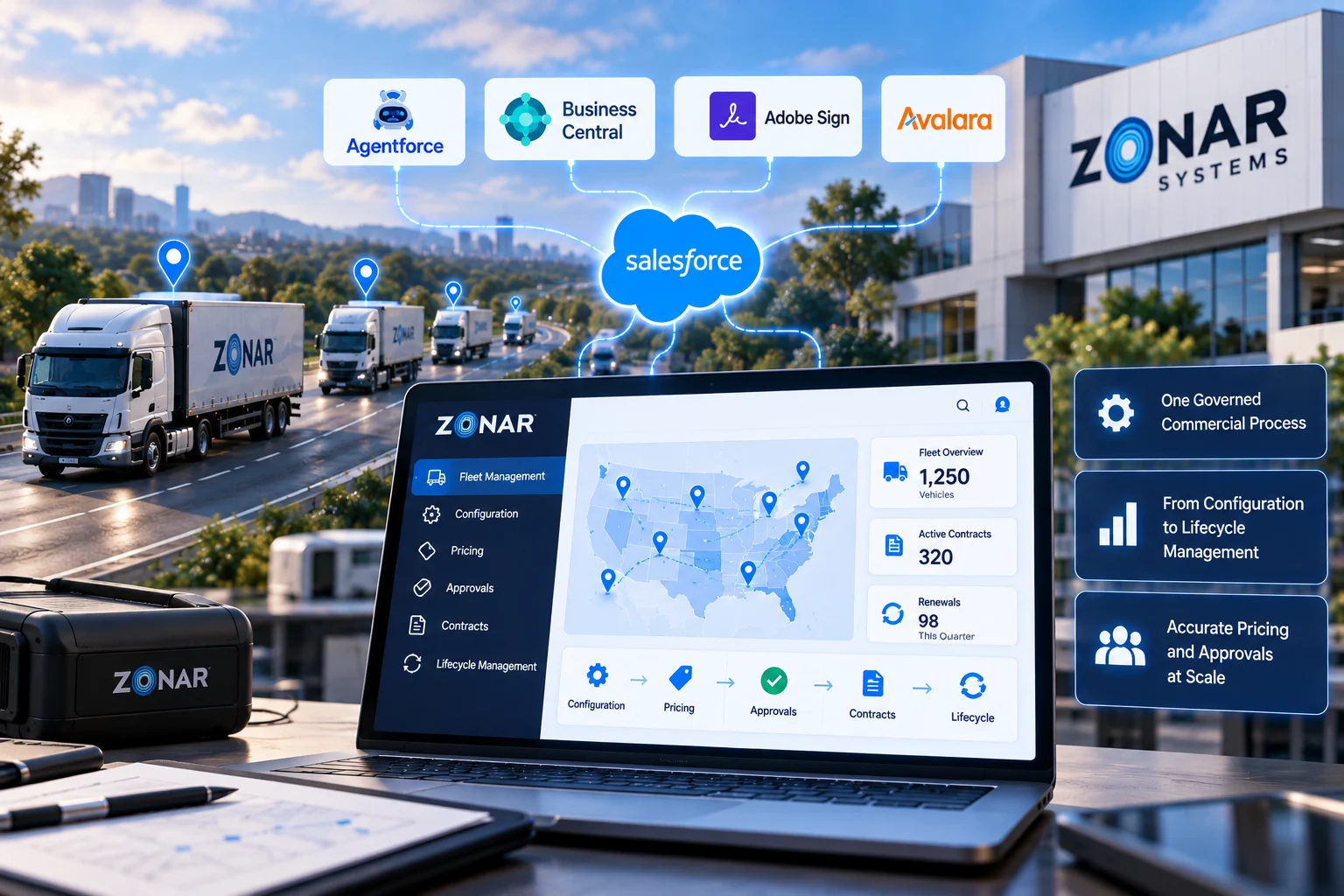
Industry: Mobility & Accessibility
The problem
Demand was outgrowing spreadsheet-and-email ordering, and each new region took months to open.
What we did
Built a B2B Commerce storefront with Salesforce Order Management and automated ordering end to end.
Result
Live in 8 weeks. New regions now open in 1–2 weeks, down from 4–6 months.

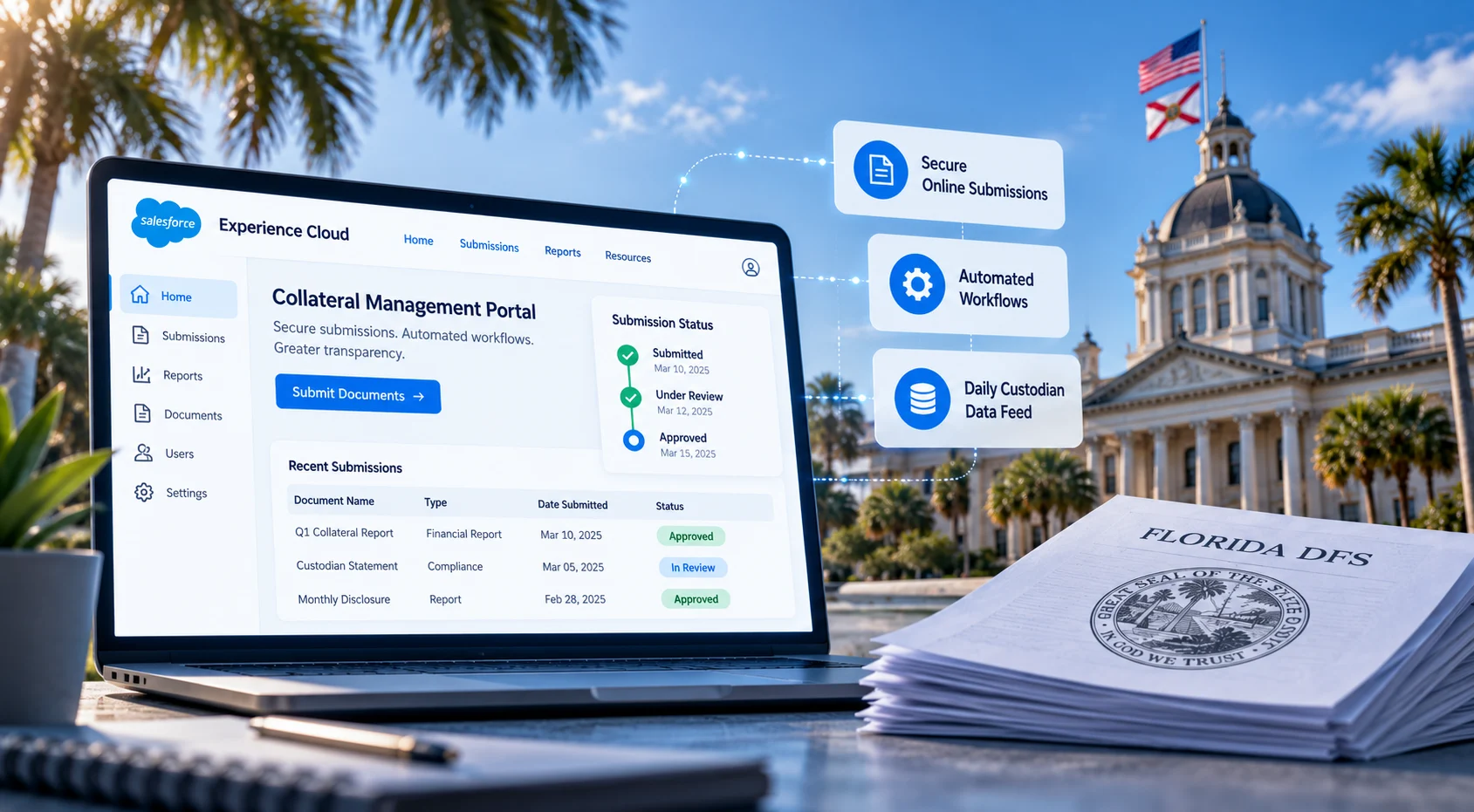
Industry: Physical Security & Surveillance

The problem
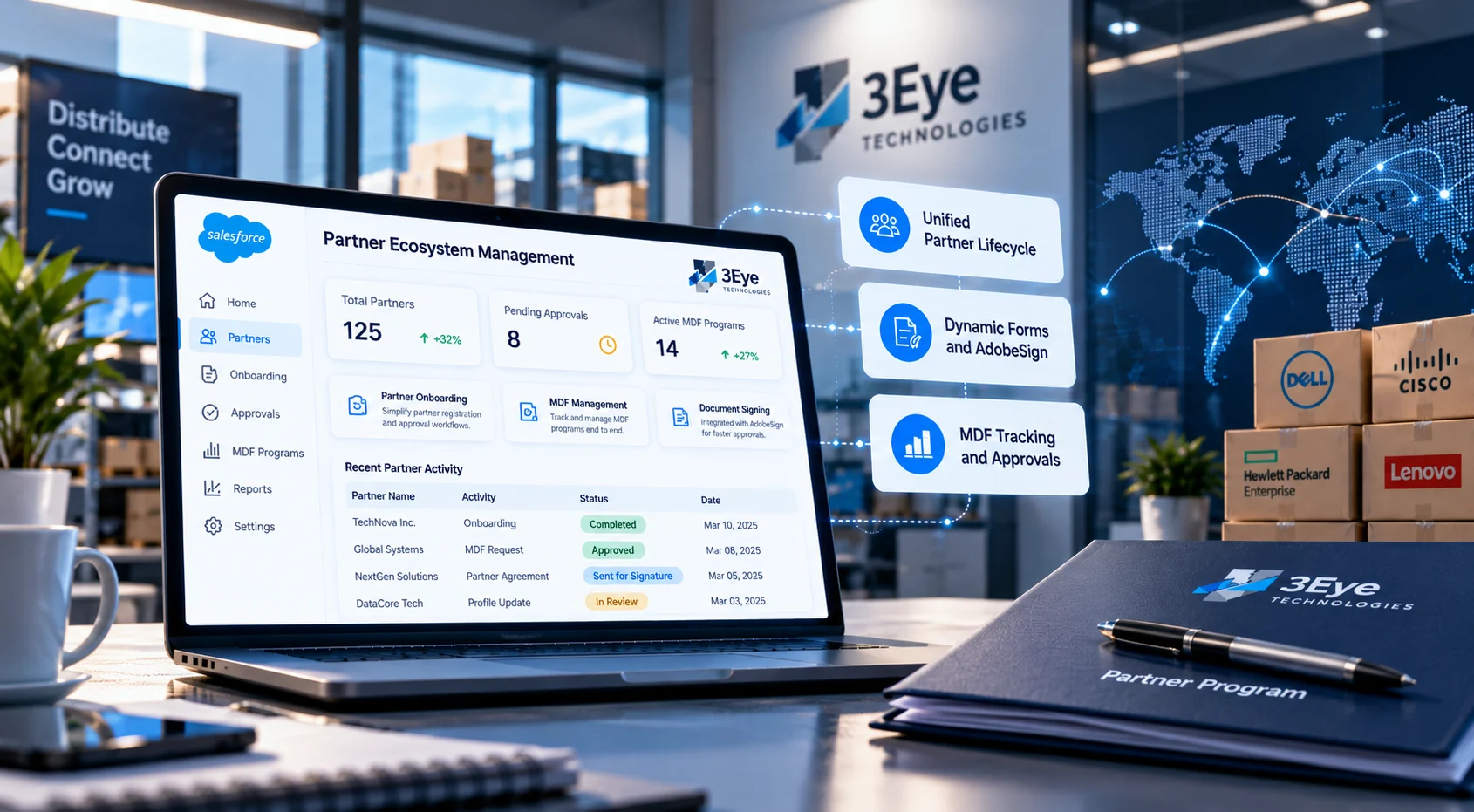
A growing partner network meant more small accessory orders landing on the sales team’s desk.
What we did
Launched a self-service storefront on Experience Cloud and B2B Commerce, with MuleSoft syncing orders to QuickBooks.
Result
Customers and partners now order on their own, and the channel scales without extra headcount.

Clients rate Stack Intelligence 5/5 on Salesforce AppExchange, and these four quotes came in after their projects wrapped.
Showing testimonial 1 of 4: Vince Tan, Director of IT, Ascensus Specialties










A Stack Health Cloud project runs in seven steps. It starts with one real patient journey and ends with support after launch. Your team signs off at every step.
Pick one patient and we'll follow their trip through your system, start to finish. We talk with whoever touched it, from the front desk to nurses to billing.
Got Salesforce already? Then we open it up and look around. Access settings get reviewed, and we write down every connected system.
Patients, providers, care plans, and coverage each get a place in the data model. We also agree on who sees what before anything gets built.
We build in a sandbox over short sprints. Health Cloud features come first, custom code only when needed, and you see a demo after each sprint.
EHR and billing links get switched on in a test environment. Meanwhile, patient and provider data gets cleaned and trial-loaded.
A real referral goes through first. Next comes a booking, and after that a care plan. When all three pass, your staff test it themselves in user acceptance testing.
Training starts with the front desk and care teams. Admins come after. We stay on through hypercare and keep supporting you after.
For the first few weeks, we mostly watch and ask questions. Where do referrals come in? Who books the follow-up? And who's allowed to open the chart? We design the whole build around what you tell us.
Hire Salesforce ConsultantsWe built a medication ordering site on Salesforce Commerce Cloud for one health and life sciences client's patients. It shipped on time, even after some requirements changed.
We shape the data model around your own patients, providers, and programs. Nothing gets built until your team says yes to the design.
Access rules get designed before the build. Compliance gets to look them over weeks before launch.
Salesforce gets linked to your EHR and billing system, and we clean up the data along the way. Agentforce then has solid ground to work from.
Architects, developers, admins, and analysts sit on one team. The certified people are the ones on your project.
Programs change and new clinics open after launch. Our Salesforce managed services keep the org in step.
Salesforce for healthcare is Salesforce the way hospitals, clinics, health plans, and health tech firms use it. The main piece is Health Cloud. Patient, provider, and care plan records are there on day one. Usually the EHR gets connected first, with portals or AI coming in a later phase.
A healthcare CRM in Salesforce is basically a sales CRM pointed at patients or members. Click into someone's record and their calls, referrals, appointments, and care plan are all there. The front desk uses it. So do nurses and billing.
Salesforce Health Cloud is the healthcare CRM from Salesforce. A patient's medical history and everyday details, like phone number and insurance, share one file. Care plans, intake, scheduling, provider networks, and prior auths run through it as well.
Yes, it's the same product. Salesforce renamed it Agentforce Health in late 2025. In 2026, it went back to the Health Cloud name. That's why you may still see both on Salesforce pages.
Salesforce Life Sciences Cloud is the Salesforce CRM for pharma, biotech, and medtech companies. Field teams use it to plan visits and log conversations with doctors. Patient services teams run their support programs in it, from enrollment to benefits checks.
Health Cloud supports HIPAA compliance, according to Salesforce. Whether your own org is safe comes down to how it gets configured. We don't start building until your compliance people have signed off on who can see what.
Yes. Health Cloud can talk FHIR, and a few connectors come with it. Major EHRs, including Epic and Oracle Health (formerly Cerner), offer FHIR access too. When a connection needs more control, we use MuleSoft.
Hospitals and clinics book patients and coordinate care teams with it. Health plans use it for member calls and prior auths. You'll also find health tech and life sciences companies tracking patients, providers, and partners in it.
Agentforce for healthcare is a set of AI agents Salesforce built for this industry. One can sum up a patient's history for a call center rep. Another can check benefits or help with prior authorization reviews. We usually start with one or two agents your data can support today.
Yes. Our portals run on Experience Cloud and feed straight into Health Cloud. Patients log in to book a visit or finish their intake forms. They can also send their care team a message. Your staff see it all on the patient record.
There are two parts: licenses and implementation. License prices are posted on Salesforce's site for each edition. Implementation costs vary. An org with one EHR link and a single team costs less than a health system moving years of records for five departments. We give you a number after discovery.
Every project starts from a different place. One clinic team on a fresh org might be live in a few months. A health system rolling out to several sites with EHR integration needs longer. You'll get a real timeline once discovery is done.
Tell us where your patient data lives today. We'll show you how Salesforce Health Cloud would pull it together, with the right access rules from the first day.